/is-hypnosis-real
 Monica Obando
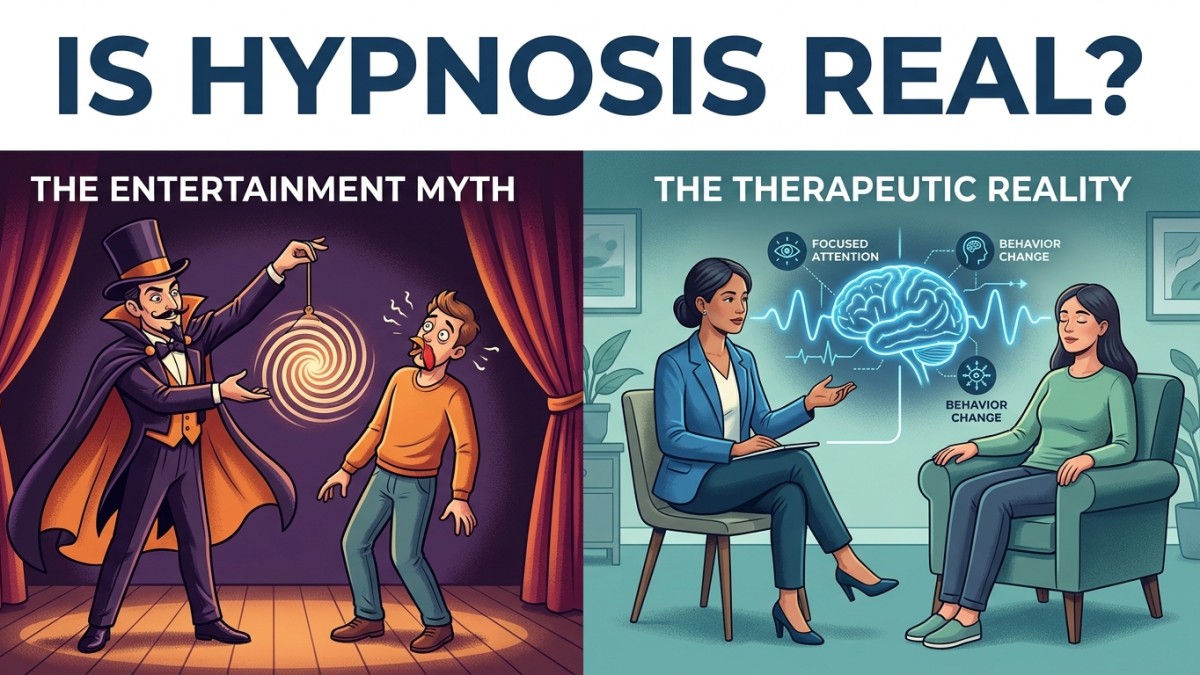
Is hypnosis real? Yes, and neuroscience is specific. A Florida hypnotherapist explains the Stanford fMRI research, the APA position, and what clinical
Is Hypnosis Real? What the Science Actually Says
Is hypnosis real? It is one of the most common questions I receive as a hypnotherapist in Florida, usually from people who are genuinely curious but have absorbed a cultural picture of hypnosis that is almost entirely wrong.
Stage shows. Pendulums. Someone going blank and doing embarrassing things on command. The image is entertainment, not medicine. And for many people, that image is the only reference point they have.
So here is the direct, evidence-based answer: yes, hypnosis is real. The neuroscientific research is specific, the clinical evidence is substantial, and the idea that hypnotherapy is fringe or alternative medicine is simply outdated.
What the Stanford fMRI Research Shows
The clearest scientific window into hypnosis comes from a 2019 study led by Dr. David Spiegel at Stanford University, which used fMRI brain imaging to observe what happens in the brain during hypnosis. The researchers found three specific, measurable neurological changes that occur during hypnosis and are distinct from ordinary resting or relaxed states.
• Reduced activity in the default mode network. This is the brain region associated with self-referential thinking, mind-wandering, rumination, and the mental chatter of ordinary awareness. In hypnosis, this region quiets in a specific and observable way.
• Increased connectivity between the prefrontal cortex and the insula. These are areas involved in focused attention, interoception, and the integration of thought with physical sensation. This increased connectivity is associated with the quality of inward focus that characterizes the hypnotic state.
• Reduced connectivity between the dorsolateral prefrontal cortex and the default mode network. This is the neurological basis for the reduced critical filtering that makes the subconscious more accessible during hypnosis.
These are not placebo effects. They are observable changes in brain function that occur specifically during hypnosis and are distinct from what is observed during ordinary relaxation, meditation, or sleep.
The American Psychological Association Position
The APA recognizes clinical hypnotherapy as an evidence-based treatment modality. A meta-analysis published in the Journal of Consulting and Clinical Psychology found that adding hypnosis to cognitive behavioral therapy improved treatment outcomes by approximately 70 percent over CBT alone. Research on hypnotherapy for anxiety and panic attacks, phobias, pain, irritable bowel syndrome, and trauma consistently shows meaningful clinical results.
Hypnotherapy is used in hospital pain management programs, oncology units, pre-surgical preparation, and clinical practices worldwide. Its place in clinical medicine is not controversial among researchers who study it.
What Clinical Hypnosis Is Not
• It is not sleeping. You are fully awake and aware throughout every session.
• It is not a loss of control. You cannot be made to say or do anything that conflicts with your values.
• It is not stage hypnosis. Stage hypnosis selects highly suggestible volunteers for entertainment. Clinical hypnosis is a professionally applied therapeutic modality.
• It is not the portrayal in film or television.
What clinical hypnosis actually is: a professionally guided state of deeply focused, inward attention in which the analytical layer of the mind quiets and the subconscious becomes more open and receptive than it is during ordinary waking awareness. You remain yourself throughout. What changes is access.
Why That Access Matters Clinically
Most therapeutic approaches work at the conscious level. But a significant number of clinical presentations have subconscious roots. Anxiety and panic attacks that fire before conscious thought can engage. Phobias that are acknowledged as disproportionate but cannot be stopped through rational intervention. Trauma stored in the nervous system rather than in narrative memory. Limiting beliefs that operate below conscious awareness.
For these presentations, cognitive hypnotherapy for anxiety and related conditions offers something most conscious-level approaches cannot: direct access to the level where the pattern is actually stored.
A clinically grounded and scientifically rigorous introduction to what hypnosis does and how it works:
📚 Trancework: An Introduction to the Practice of Clinical Hypnosis by Michael D. Yapko, PhD
The most comprehensive and scientifically serious introduction to clinical hypnosis available. Yapko covers the neuroscience, the mechanisms of therapeutic suggestion, and the clinical applications of hypnotherapy. Essential reading for anyone who wants to understand this field beyond the cultural mythology.
→ Get it on Amazon: https://amzn.to/3SIg2ms
What Hypnotherapy in Tampa Looks Like in Practice
As a hypnotherapist in Florida serving clients in Tampa, Lutz, Wesley Chapel, and virtually worldwide, I work with anxiety, panic attacks, phobias, trauma, overthinking, generational patterns, and limiting beliefs. Sessions are available in English and Spanish.
Most clients describe the experience as more ordinary than they expected and more profound at the same time. They are awake. They hear everything. They remain themselves throughout. What changes is the quality of inner awareness and the depth of access to what is underneath the ordinary mental noise.
Supporting the Work Between Sessions
🎙️ Dreamegg Portable Noise Machine for Baby & Adult
A consistent, distraction-free sonic environment supports both in-session depth and between-session sleep quality. Sleep is one of the primary windows during which the brain consolidates learning and integrates subconscious work. I recommend this to clients who want to support the process between appointments.
→ Get it on Amazon: https://amzn.to/4hgqN9f
Ready to Find Out for Yourself?
I offer a free 30-minute consultation where we can talk about what you are working with and whether hypnotherapy is the right fit. Sessions in person in Lutz, FL and virtually throughout Florida and worldwide.
→ Book your free consultation at monicaobando.com
📚 Recommended Reading • Trancework: An Introduction to the Practice of Clinical Hypnosis by Michael D. Yapko, PhD • The Hypnotic Brain by Peter Brown • Dare: The New Way to End Anxiety and Stop Panic Attacks by Barry McDonagh |
Monica Obando is a Certified Clinical Hypnotherapist (CCHt, CTACC, RYT) and hypnotherapist in Florida specializing in anxiety, trauma, phobias, and subconscious pattern work. She serves clients in Tampa Bay and worldwide.
Disclosure: This post contains Amazon affiliate links. I may earn a small commission at no extra cost to you. I only recommend books and products I genuinely use or suggest to clients.
Other Blogs you may be interested in: