trauma -hypnotherapy-tampa
 Monica Obando
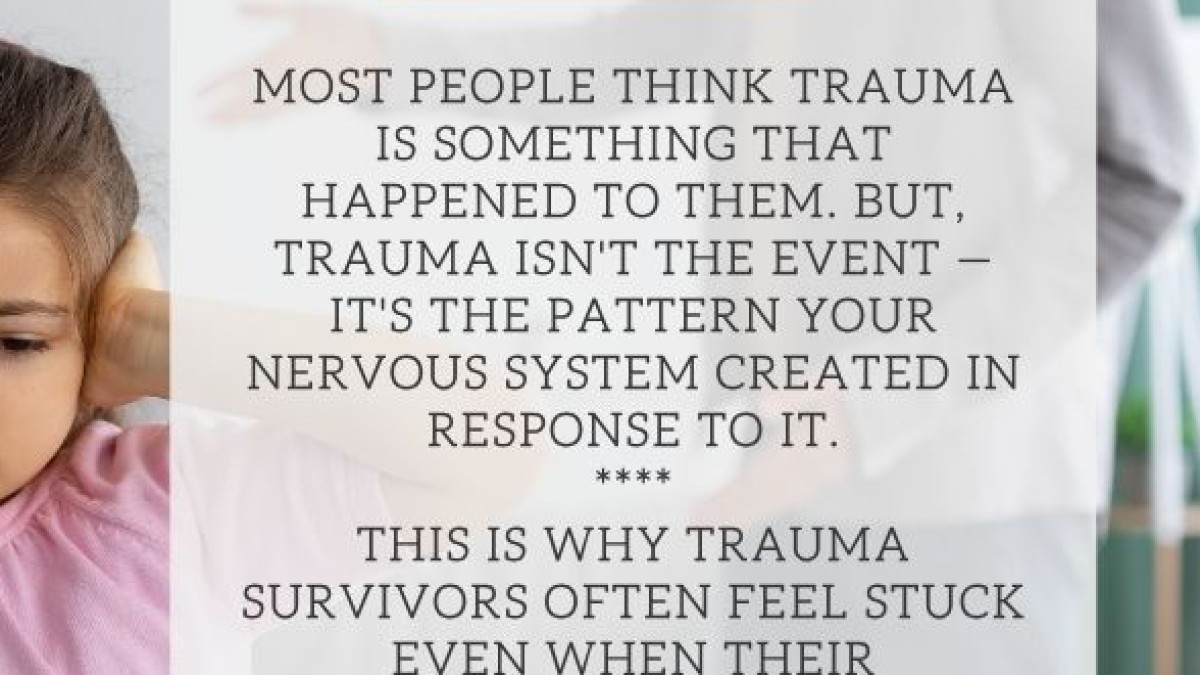
Emotional trauma isn't the event — it's the unfinished response your nervous system stored. Learn how hypnotherapy helps release emotional trauma at
Your emotional trauma Isn't Your Identity — It's a Pattern Your Nervous System Learned
When most people hear the word "trauma ," they think of catastrophic events — wars, accidents, abuse. But in my work as a Clinical Hypnotherapist serving clients in Tampa, Lutz, Wesley Chapel, and beyond, I've come to understand emotional trauma very differently.
emotional trauma isn't always a single dramatic event. And — most importantly — emotional trauma isn't the event at all.
emotional trauma is the unfinished response your nervous system created in reaction to the event.
This distinction changes everything. Because it means emotional trauma isn't something that happened to you and is now over. It's something still happening — running as an active pattern inside your nervous system and subconscious, shaping your reactions, your relationships, and your sense of safety in the world.
And it also means it can be resolved.
What emotional trauma Actually Is
When something overwhelming happens, your nervous system mobilizes its full survival response. Heart rate spikes. Muscles brace. Stress hormones flood the body. Your entire system prepares to fight, flee, or freeze.
In an ideal world, the threat passes — and the cycle completes. You shake, you cry, you rest. The stored charge discharges. Your nervous system returns to baseline.
But sometimes that completion doesn't happen. The event was too overwhelming. There was no safe space to process it. Life kept moving before your body could catch up.
So the charge stays — stored, unfinished, waiting. Not in your memory, exactly. In your body. In your nervous system. In the subconscious patterns that continue to run beneath your conscious awareness.
Why emotional trauma Keeps Showing Up
This is why emotional trauma survivors often feel stuck even when their outer circumstances have completely changed. The mind knows the threat is over. The body doesn't.
It's why you can know a relationship is safe and still feel anxious in it. Why a tone of voice, a smell, or a look on someone's face can send your nervous system into survival mode before your conscious mind has a chance to catch up. Why your reactions sometimes feel bigger than the situation — because to your nervous system, they're not responding to now. They're responding to *then*.
Common signs emotional emotional trauma is still active in the nervous system:
- Persistent hypervigilance or a sense that something bad is about to happen
- Emotional reactions that feel out of proportion to what's happening in the present
- Difficulty feeling safe in your body, in stillness, or in close relationships
- Physical symptoms without clear medical cause — chronic tension, fatigue, digestive issues, headaches
- Patterns of self-sabotage, people-pleasing, or emotional shutdown
- A feeling of being disconnected from yourself or from life
None of these are character flaws. They are the intelligent, adaptive responses of a nervous system that is still doing its job — protecting you from something it believes is still a threat.
Why Understanding Isn't Always Enough
One of the most common things I hear from clients who come to me after years of talk therapy is: "I understand exactly what happened and why I reacted this way. I just can't seem to feel differently about it."
This is one of the most frustrating experiences an emotional trauma survivor can have — and it makes complete sense, because of where emotional trauma lives.
Understanding is a conscious process. But emotional trauma lives in the subconscious — in the body, in the automatic responses, in the deeply stored patterns that predate language and logic. Cognitive insight can be enormously valuable. But it operates at the 10% level. Emotional trauma is stored in the 90%.
This is not a failure of therapy, or of the person. It's simply a matter of working at the right level.
How Hypnotherapy Approaches Emotional trauma
Hypnotherapy creates access to the subconscious level where emotional trauma is actually stored. By guiding you into a deeply relaxed, focused state, we bypass the analytical mind and work directly with the patterns, memories, and stored charge beneath.
This allows us to:
Complete the unfinished response. The nervous system's survival response was interrupted. In the safety of the hypnotic state, it can finally complete — releasing the stored charge that has been held in the body.
Process the emotional memory. emotional trauma memories are different from ordinary memories — they're stored with their full emotional and physical charge intact. Hypnotherapy allows these memories to be processed and integrated, so they become part of the past rather than a recurring present-tense experience.
Update the subconscious beliefs formed in the aftermath. Emotional trauma often leaves behind deeply held subconscious beliefs: *I'm not safe. I can't trust. Something is wrong with me. I have to stay in control.* These beliefs drive behavior and emotional responses long after the original event. In hypnotherapy, we work to update these at the level where they live.
Build new patterns of safety and regulation. The nervous system learned one way of responding. It can learn another.
What Sessions Look Like
emotional trauma hypnotherapy with me is gentle, client-led, and paced entirely by what feels safe for you. We never push into material before you're ready. Many clients are surprised to find that the process feels deeply peaceful rather than re-traumatizing.
You remain fully aware and in control throughout every session. You can speak, pause, or stop at any time. Many clients describe their sessions as the most rested they've felt in years.
Most clients working with emotional trauma notice meaningful shifts within 4–8 sessions, depending on the depth and complexity of what they're working with.
A Note on "Small t" trauma
Not all emotional trauma is dramatic. In fact, some of the most impactful patterns I work with come from what's sometimes called "small t" emotional trauma — the chronic, accumulated experiences of a childhood where emotional needs weren't consistently met, relationships where you didn't feel safe to be yourself, or years of stress without adequate support.
These experiences don't always feel like "trauma " because they were just... life. But they shape the nervous system just as powerfully. If you carry a persistent sense that you're not enough, that you have to earn love, that safety isn't available, or that you have to stay small to stay safe — these patterns very often have roots in early emotional experiences.
Hypnotherapy can reach those roots.
Ready to Work at the Source?
If you recognize yourself in what you've read here, I'd be honored to talk. I offer a free 30-minute consultation where we can explore what you're working with and whether hypnotherapy is the right fit.
Sessions are available in person at my Lutz, FL office — serving Tampa, Wesley Chapel, New Tampa, Land O' Lakes, and surrounding areas — and virtually throughout Florida and worldwide.
Sessions in English and Spanish (sesiones disponibles en español).
→ Book your free consultation at monicaobando.com
Monica Obando is a Certified Clinical Hypnotherapist (CCHt, CTACC, RYT) specializing in trauma , anxiety, and subconscious pattern work. She serves clients in Tampa Bay and worldwide.