/people-pleasing-hypnotherapy-tampa
 Monica Obando
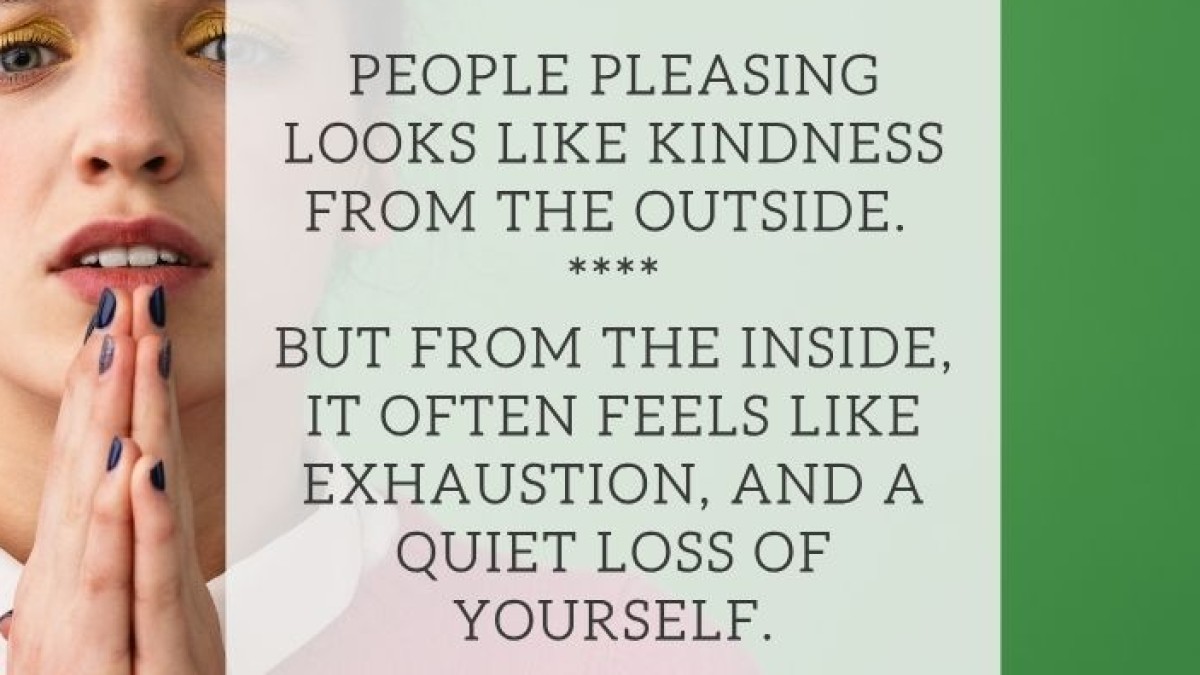
People pleasing isn’t a personality trait — it’s a subconscious survival strategy. Learn how hypnotherapy can...
People-pleasing isn’t a personality trait — it’s a subconscious survival strategy. Learn how hypnotherapy addresses the root of people-pleasing patterns:
If you’ve spent most of your life putting other people’s needs before your own — saying yes when you meant no, shrinking your preferences to keep the peace, feeling responsible for everyone else’s emotional state — you’ve probably been told at some point that you’re “too nice.”
But people-pleasing isn’t about being too nice. It’s about not feeling safe enough to be anything else.
As a Certified Clinical Hypnotherapist serving clients in Tampa, Lutz, Wesley Chapel, and virtually worldwide, I work with people-pleasing patterns regularly. And what I’ve found, consistently, is this: underneath the compulsion to please is almost always a subconscious belief that safety, love, and belonging are conditional on compliance. That conflict is dangerous. That your needs are a burden. That to be accepted, you must first be agreeable.
These beliefs didn’t come from nowhere. They were learned. And because they live in the subconscious, they can’t be changed by simply deciding to be different.
How people-pleasing Gets Created
people-pleasing is a nervous system adaptation — a strategy your subconscious developed in response to a specific emotional environment, usually in childhood.
Maybe expressing your needs led to conflict, punishment, or withdrawal of affection. Maybe you grew up in a home where someone’s emotions were unpredictable, and staying attuned to their mood was a way of staying safe. Maybe love felt earned rather than given — and being easy, agreeable, and low-maintenance was what earned it. Maybe you were the family peacemaker, the one who absorbed tension so others didn’t have to.
Whatever the specific origin, the subconscious concluded: keeping others comfortable is how I stay safe. And it built an entire behavioral system around that conclusion.
The Hidden Costs
Because people-pleasing looks considerate from the outside, its costs tend to be invisible — carried privately, often dismissed as ingratitude or oversensitivity even by the person experiencing them.
The costs include: chronic resentment that can’t be expressed, a persistent sense of not being truly known by anyone, giving far more than is received in relationships, not knowing what you actually want because you’re always focused on what others want, and a slow erosion of identity — a feeling of having disappeared into the needs and expectations of everyone around you.
Why Willpower Doesn’t Fix It
Most people-pleasers know they need to change the pattern. They’ve read the books, heard the advice, made the commitment to “just say no.” And then the moment arrives — someone makes a request, disappointment is in the air — and the yes comes out automatically, before the rational mind had a chance to intervene.
This is not a character flaw. It’s the subconscious nervous system firing faster than conscious reasoning. The pattern is not a decision. It’s an automatic protective response — and it lives at a level that willpower simply can’t reach.
How Hypnotherapy Works With people-pleasing
Hypnotherapy provides direct access to the subconscious level where the people-pleasing pattern is stored. In the deeply relaxed state of hypnosis, we can identify the original belief driving the behavior, trace it to its origin, release the emotional charge keeping it active, and update the subconscious identity at its root.
When the underlying belief changes — when the nervous system genuinely learns that it is safe to have needs, to disappoint others, to take up space — the behavior changes naturally. Not through force or discipline, but because the protection it was providing is no longer needed.
→ Book your free consultation at monicaobando.com