Self-Sabotage Isn't a Character Flaw — It's a Subconscious Loyalty
 Monica Obando
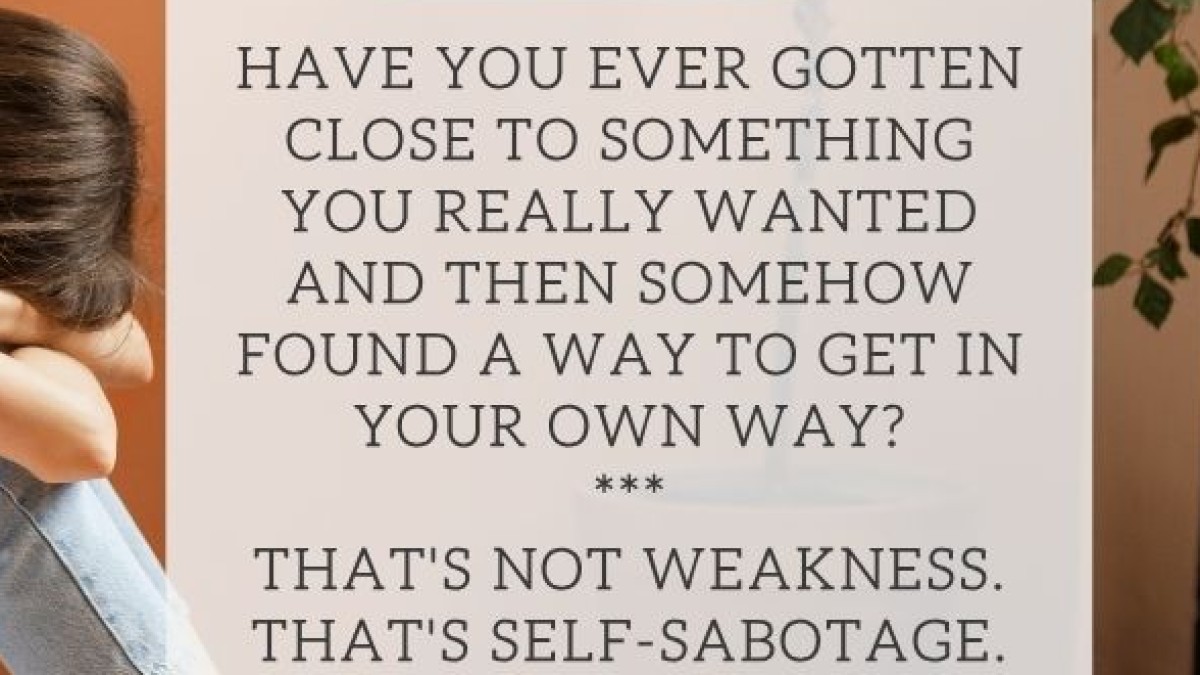
Self-sabotage isn't laziness or fear of success — it's your subconscious being loyal to...
Self-sabotage isn't laziness or fear of success — it's your subconscious being loyal to an old belief.
You've probably heard the term "self-sabotage" used as if it were a personality flaw, something people do because they're lazy, undisciplined, or secretly afraid of success.
But in my work as a Certified Clinical Hypnotherapist serving clients in Tampa, Lutz, Wesley Chapel, and virtually worldwide, I've come to understand self-sabotage very differently.
Self-sabotage is not a character flaw. It's subconscious loyalty, to a belief about who you are and what you're allowed to have. And once you understand that, everything changes.
How Limiting Beliefs Get Created
Every person grows up absorbing messages about themselves and the world. Some of these messages are explicit, things people actually say to us. Many are implicit, absorbed through patterns, dynamics, and the emotional atmosphere of the environments we grew up in.
From this experience, the subconscious mind builds a map. A set of operating beliefs about identity, worthiness, safety, and possibility. These beliefs form early, often before we have the cognitive capacity to question them, and they become the foundation on which we build our sense of self.
Common limiting beliefs I work with:
- I don't deserve success / love / good things
- If I get too big, I'll lose the people I love
- Success means I'll be alone
- I have to stay small to stay safe
- I'm not smart / capable / worthy enough
- People like me don't get to have that
- Something always goes wrong for me
None of these beliefs are true. But to the subconscious, which adopted them as survival strategies in a specific environment, they feel absolutely real.
Why the Subconscious Sabotages Your Goals
The subconscious mind is a consistency-seeking system. Its primary function is to keep you aligned with the beliefs and identity it holds about you.
So when your conscious goals start to contradict your subconscious beliefs, when you're building something larger than the story says you're allowed to have, the subconscious experiences a threat to its coherence. And it does what it always does when it senses a threat: it protects you.
It pulls you back toward familiar ground. Toward the identity it knows. Toward the story that feels "safe", even if that story is one of limitation, struggle, or smallness.
This is self-sabotage. Not resistance. Not fear of success. Loyalty, to an old program that no longer serves you.
What Self-Sabotage Actually Looks Like
The sabotage rarely announces itself. It wears disguises:
Procrastination. Specifically on the things that matter most, the project, the conversation, the action that would actually move you forward. The sabotage targets the exact point of potential growth.
Momentum collapse. Starting strong and then mysteriously losing steam right when things are working. The subconscious senses that progress is contradicting its beliefs, and intervenes.
Relationship self-sabotage. Unconsciously creating distance, conflict, or drama in relationships that are going well, because the subconscious doesn't believe safe, loving connection is available to you.
Imposter syndrome. The persistent sense that you've fooled everyone and will eventually be "found out", a direct expression of the underlying belief that you don't actually deserve where you are.
Moving the goalposts. Achieving something and immediately minimizing it, or setting an even higher bar that ensures you can never simply be enough.
Why Willpower Doesn't Solve It
The reason so many intelligent, motivated people struggle with self-sabotage for years, despite therapy, coaching, books, and genuine effort, is that they're fighting the wrong battle.
Willpower is a conscious tool. Self-sabotage comes from the subconscious. These systems operate at different speeds and different depths. The subconscious is older, faster, and more automatic than conscious reasoning. In a sustained conflict between the two, the subconscious wins.
The answer isn't more force. It's changing the belief that's generating the behavior.
How Hypnotherapy Works With Limiting Beliefs
Hypnotherapy provides direct access to the subconscious, where limiting beliefs live and where self-sabotage originates.
In the deeply relaxed state of hypnosis, the analytical, critical mind quiets, and the subconscious becomes receptive to change. In that state, we can:
Identify the exact belief driving the sabotage. Not the surface story ("I'm lazy," "I'm afraid of success") but the specific subconscious conviction underneath it. This is often a surprise to clients, the real belief is frequently simpler and more fundamental than they expected.
Trace the belief to its origin. Where did the subconscious first adopt this belief? What experience anchored it in place? Bringing this into awareness, in the safety of the therapeutic state, creates the possibility of release.
Release the emotional anchor. Limiting beliefs are held in place by emotional experiences. When the emotion is processed and discharged, the belief loses its grip.
Update the subconscious identity. We work with the subconscious to install new beliefs that are aligned with who you actually are and what you genuinely deserve, not affirmations, but deep subconscious restructuring.
When the belief changes, the behavior changes, because the subconscious no longer has anything to be loyal to.
You Are Not Broken
If you've been struggling with self-sabotage, I want to say this clearly: you are not broken, lazy, or afraid of success.
You are running an old, loyal program. And programs can be updated.
I offer a free 30-minute consultation where we can explore what's underneath your self-sabotage and whether hypnotherapy is the right fit. Sessions in person in Lutz, FL, serving Tampa, Wesley Chapel, New Tampa, Land O' Lakes, and surrounding areas, and virtually throughout Florida and worldwide.
Sessions in English and Spanish (sesiones disponibles en español).
→ Book your free consultation at monicaobando.com
Monica Obando is a Certified Clinical Hypnotherapist (CCHt, CTACC, RYT) specializing in limiting beliefs, self-sabotage, trauma, and subconscious pattern work. She serves clients in Tampa Bay and worldwide.